
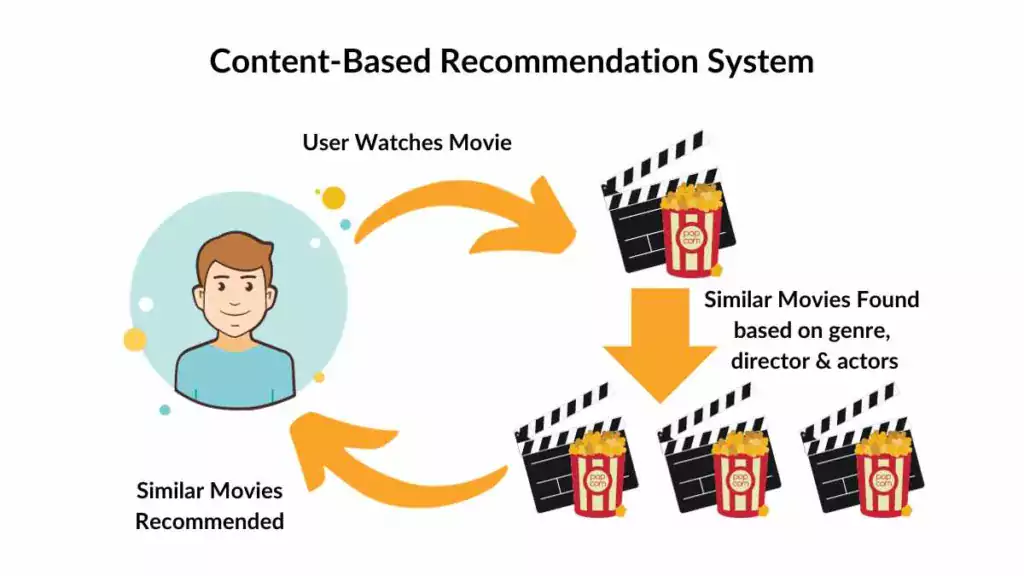
A detailed Content Recommendation Engine Market Share Analysis reveals a fascinating and multi-layered competitive landscape, where a few tech giants who pioneered the technology for their own platforms now compete with a vibrant ecosystem of third-party specialist vendors. A significant, though often indirect, portion of the market share is controlled by the major technology platforms like Google (through YouTube and Google News), Amazon (through its e-commerce site and Prime Video), and Meta (through Facebook and Instagram). These companies have developed some of the most sophisticated recommendation algorithms in the world for their own internal use, and their success has set the standard for user expectations across the entire internet. While they do not typically sell their core recommendation engines as a standalone product, some, like AWS with its Amazon Personalize service, have begun to productize their underlying technology, allowing other businesses to leverage their powerful machine learning infrastructure. Their competitive advantage is their immense scale of data and their massive R&D investment in AI. The Content Recommendation Engine Market size is projected to grow USD 103.4 Billion by 2035, exhibiting a CAGR of 25.42% during the forecast period 2025-2035. The influence of these giants shapes the entire market, even when they are not direct competitors.
The largest and most direct segment of the market share is held by a diverse and highly competitive group of third-party, best-of-breed recommendation engine providers. This category ranges from large, well-established players to agile, venture-backed startups. These companies, such as Outbrain and Taboola (who have historically dominated the "content discovery" space for online publishers), and more modern, API-first SaaS platforms, compete by offering a powerful, easy-to-implement, and customizable recommendation solution for businesses that lack the resources to build their own. Their competitive strategy is built on providing a solution that can be quickly integrated into any website or app, offering sophisticated features like A/B testing, detailed analytics dashboards, and a user-friendly interface for marketers to control the recommendation logic. Their market share is built on their ability to serve a wide range of customers, from mid-sized e-commerce stores to large media conglomerates, who are seeking a dedicated, specialist partner to solve their content discovery challenges.
Looking to the future, the distribution of market share will be increasingly influenced by a provider's ability to offer flexibility, transparency, and specialization. The market is moving away from a "black box" approach, where the recommendation logic is entirely controlled by the vendor. Market share will gravitate towards vendors who offer more open and "tunable" platforms, giving clients greater control over the business rules and algorithms that drive the recommendations. Furthermore, as data privacy becomes a paramount concern, vendors who can provide effective recommendations while prioritizing privacy-preserving techniques and offering clear explanations for their algorithmic outputs will gain a significant competitive advantage. Specialization will also be a key factor. While some vendors will continue to offer general-purpose engines, there will be a growing market for specialized providers who have deep expertise and pre-trained models for a specific industry vertical, such as financial services, travel, or B2B commerce. The future leaders will be those who can successfully combine powerful AI with a flexible, transparent, and specialized go-to-market strategy.
Top Trending Reports -

 English
 Arabic
 French
 Spanish
 Deutsch
 Turkish
 Dutch
Dutch
 Italiano
 Russian
 Romaian
 Portuguese (Brazil)
 Greek
Greek