
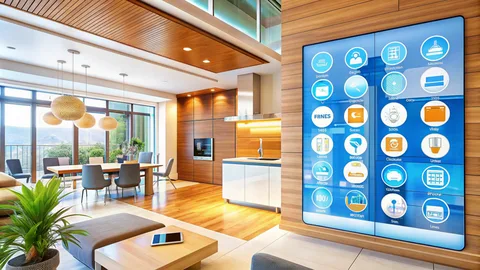
Smart home automation becomes genuinely useful when it is engineered around predictable human behavior, resilient local logic, and a network designed to handle scale; for homeowners who want a system that works day after day, consider professional approaches to smart home automation that prioritize local fallback for locks and alarms, segmented networks for privacy, and carefully tuned automations that do not annoy. Modern automation is more than a collection of apps — it is a set of coordinated systems that anticipate needs, reduce friction, and protect privacy while remaining maintainable and upgradeable as technology evolves.
The promise of smart home automation — convenience, energy savings, and improved security — is real, but only if the system is planned and commissioned with discipline. Homes that fail with automation typically share the same root cause: poor network planning, reliance on cloud-only logic for safety-critical functions, or an explosion of single-purpose devices that never integrate. By contrast, successful automations are designed from the outset: sensors and rules are chosen for reliability, actuators are placed for serviceability, and the homeowner receives clear documentation and a realistic maintenance plan. This article lays out a comprehensive, practical approach to planning, selecting, commissioning, and maintaining smart home automation that you will still be glad you have five years from now.
Why Smart Home Automation Needs Systems Thinking
Smart home automation can feel miraculous when it works and maddening when it doesn’t. The difference comes down to systems thinking. A single device, such as a smart bulb, can deliver neat benefits, but when dozens of devices from different vendors are combined without a central strategy, the whole can fall apart. Systems thinking treats the network, controller, sensors, actuators, user interfaces, and human habits as a single, evolving system. It considers failure modes, security boundaries, upgrade paths, and day-to-day ergonomics. When you architect automation as an integrated system you avoid common pathologies: broken scenes that confuse users, deadlocks between automations, and cascades of failed dependencies when a cloud vendor changes an API.
Core Foundations: Network, Power, And Local Control
Three foundations determine reliability: network, power, and local control. The network must be engineered, not guessed. Use a wired backbone for bandwidth-intensive or latency-sensitive devices, strategically place access points based on measured coverage rather than rule-of-thumb, and segment IoT devices on separate SSIDs or VLANs to reduce attack surface. Power planning must include UPS for mission-critical controllers and clear strategies for battery management on wireless sensors. Local control means essential automations — locks, alarms, garage doors, HVAC safety interlocks — execute locally without requiring internet; cloud features can augment convenience but must not be the only control path for mission-critical systems.
Choosing A Control Architecture That Lasts
Control architecture choices include cloud-first, local-first, or hybrid models. Cloud-first systems are easy to set up and provide remote convenience, but they risk operational failures when vendor clouds are disrupted or when subscription models change. Local-first platforms keep essential logic inside the home and preserve privacy, while hybrid architectures combine local execution for critical tasks with cloud services for optional remote features and analytics. For long-term value, prefer platforms that offer exportable configuration backups, documented APIs, and a migration path so you’re not locked into a single vendor indefinitely.
Devices And Standards: Avoiding Short-Lived Buzz
When selecting devices, favor proven hardware with solid firmware support and broad interoperability. Standards matter: Thread and Matter are improving cross-vendor compatibility; Zigbee and Z-Wave remain strong for many sensor and actuator ecosystems; IP-based devices (Ethernet/PoE) bring predictable behavior and professional-level reliability. Avoid depending on single-purpose products that isolate themselves in proprietary clouds. For core infrastructure (locks, thermostats, cameras), professional-grade devices with predictable update policies are worth the extra cost because reliability compounds over time.
Sensors: Place, Purpose, And Practicality
Sensors provide the data that make automations useful. Choose sensors based on purpose: motion sensors for circulation areas, desk-presence sensors for home offices, multi-zone temperature sensors for accurate HVAC control, and door/window contacts for security. Placement matters: ceiling-mounted motion sensors cover broad areas but may miss desk activity, while wall-mounted or desk sensors can detect presence more accurately. Minimize nuisance triggers by combining sensor data — for example, require motion plus door open to trigger “arrive home” flows — and tune timeouts conservatively so lights and HVAC don’t switch off while someone is reading or working.
Lighting And Shading: High-Impact, Low-Drama Automations
Lighting and shading commonly provide the highest perceived value for the effort. Program scenes that map to actual activities: morning routines, cooking, movie mode, and bedtime. Use sensors and schedules together to keep lights off when rooms are unoccupied, but tune timeouts to match behavior. Integrate motorized shades with ambient sensors and HVAC so shading reduces solar gain instead of fighting the HVAC. Use tunable white fixtures to support circadian lighting where relevant. Keep automations simple and obvious; complexity breeds confusion and eventual abandonment.
Climate Control: Zone Smart, Not Global
HVAC is both a comfort and energy battleground. Break homes into meaningful zones — not just HVAC duct zones but human-use zones — and control them with a mix of thermostats, smart radiator valves, and ventilation control. Integrate occupancy and window/door sensors so the system avoids conditioning empty spaces. Use weather and solar forecasts to precondition spaces efficiently and combine with thermal modeling for fuel/energy savings. For older systems, retrofit smart valves and smart thermostats instead of trying to centrally micromanage every radiator from a vendor cloud.
Security And Access: Privilege, Audit, And Local Fallback
Security automation must emphasize privilege controls and auditability. Use unique credentials per account, enforce two-factor authentication for remote admin access, and segment security devices onto isolated networks. Keep video storage options flexible: local NVR for privacy-first users, encrypted cloud storage for offsite redundancy if desired. Always design for local fallback: door locks and alarm arming should remain operable if the internet fails. Provide an audit trail and clear procedures to revoke access for lost devices and guests.
Entertainment And Multiroom Audio: Simplify The Experience
Distributed audio and media must feel effortless. Centralize source management where possible and present simple presets (dinner, party, movie) rather than exposing complex routing to end users. Use wired connections for fixed installations where latency and quality matter, and favor managed streaming clients that avoid frequent codec or app-breaking updates. Control hierarchies should be predictable: a wall keypad or panel for shared zones and personal app control for individual devices.
UX: Interfaces That People Use, Not Collectors Of Buttons
No matter how clever the backend, the system’s success depends on usable interfaces. Design a small set of clear scenes and place them on intuitive physical controls for guests and low-tech users. Provide mobile app personalization for power users but keep common scenes accessible from a single shared interface. Name scenes in plain language; avoid vendor jargon. Provide a reliable “panic” or master-off function that everyone knows.
Commissioning: The Non-Negotiable Step
Proper commissioning is where automations become dependable. Commissioning includes sensor calibration, network performance validation, latency checks, verification of scene timing, and failure-mode tests (internet down, battery failure, device offline). Commissioning should include a documented adjustment window during which the installer returns to refine timeouts and sensor placement after occupants have used the system for a few weeks. Deliver a commissioning report with test results and tuned setpoints as part of the handover package.
Monitoring, Maintenance, And Update Policies
A home is a long-lived system; plan maintenance. Use monitoring to detect failing batteries, network degradation, or devices that frequently drop connections. Manage firmware updates carefully — staging updates and testing them on a non-critical device reduces the chance of widespread breakages. Offer a maintenance plan for less technical homeowners: periodic checks, firmware testing, and prioritized support.
Data, Privacy, And Responsible Cloud Use
Decide what data the household is comfortable storing in the cloud. Some households prefer local video archives and local log retention, while others accept cloud convenience for remote access and analytics. Design privacy-first: minimize telemetry, use local processing where possible, and keep data retention policies explicit. For any cloud vendor, document how long logs are kept, who can access them, and what encryption protections exist.
Resilience: Redundancy, Graceful Degradation, And Emergency Plans
Build resilience by anticipating failure. Provide local fallbacks for security and access, UPS support for controllers, and segmented networks to prevent lateral attacks. Document emergency procedures and make them easy to access. A resilient system degrades gracefully — it may lose advanced conveniences during an outage but retains core safety and access functionality.
ROI And Where To Invest First
If budget is limited, invest first in network upgrades, locks, a reliable thermostat, and lighting automation. These deliver the most daily impact. Shading, multiroom audio, and full AV can follow as phases. Quantify energy savings where possible; thermostats and shading deliver measurable returns when tuned to occupancy and local tariffs.
Case Studies And Practical Patterns
In practice, small targeted investments often yield the best outcomes. A family that installed presence-based HVAC zoning and automated shades saw a measurable reduction in peak cooling loads, while another household saved headaches by centralizing control and insisting on local lock operation that never depended on the vendor cloud. These patterns show that real value comes from careful selection and integration rather than from acquiring the most devices.
Emerging Trends: Matter, Edge AI, And Better Interoperability
Interoperability will get easier. Matter promises to reduce fragmentation, and edge AI enables privacy-preserving predictive automations. Future-proof by designing modular systems and picking platforms with exportable configurations. Devices that do more processing locally will improve privacy and responsiveness.
Conclusion: Automation Should Reduce Friction, Not Add It
Smart home automation succeeds when it becomes invisible, doing useful things without demanding attention. That requires infrastructure, professional commissioning, and a human-centered approach to automations. Prioritize local execution for safety, invest in a robust network, and design interfaces people can use. With those principles, smart home automation becomes a durable, daily benefit rather than a short-lived experiment.

 English
 Arabic
 French
 Spanish
 Deutsch
 Turkish
 Dutch
Dutch
 Italiano
 Russian
 Romaian
 Portuguese (Brazil)
 Greek
Greek