
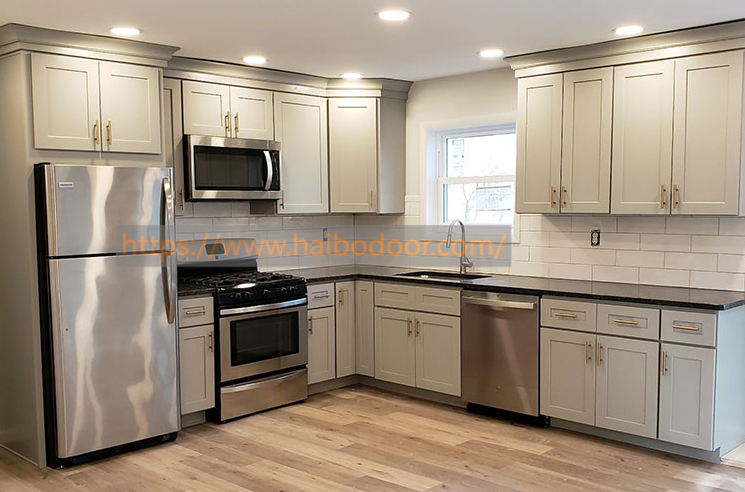
When you walk into a freshly renovated kitchen, that "new furniture" smell might feel satisfying. But at Haibo’s Cabinet Factory , we’ve learned it often means something else entirely: formaldehyde. Invisible, odorless after a few weeks, yet still there—lingering in the very materials meant to store your food, your dishes, your child’s lunchbox.
We’re not saying this to scare you. We’re saying it because we used to build them that way too. And we chose to stop.
Cabinets are often overlooked in indoor air quality conversations. People focus on paint, flooring, and glue—but the reality is, many cabinets are made with boards and laminates that emit formaldehyde for years after installation. It’s not always intentional. Sometimes it’s just the industry default. Particleboard, MDF, low-cost laminates—they’re all culprits if left unchecked.
That’s why at Haibo, we changed how we define quality. It’s not just about surface durability or storage design anymore. It’s about air—the air you cook in, the air your children breathe while helping at the counter, the air that builds your every day. We now use E0-grade or formaldehyde-free boards in our cabinet systems, along with non-toxic adhesives and water-based finishes. Yes, they cost more. Yes, they require better sourcing. But no, we’re not going back.
Because here’s the thing: formaldehyde doesn't smell after a while. It doesn't warn you when it enters your lungs. But the effects—headaches, throat irritation, long-term respiratory issues—are well documented. In high humidity, the emissions increase. In small kitchens, the buildup is faster. And in homes with pets or children, the risks grow.
So the next time you plan a cabinet upgrade, ask what’s inside—literally. Ask about the core, the glue, the coating. And if your supplier can’t tell you, maybe they haven’t asked their own factory yet. We have. Because your cabinets should store what you trust—not what you fear. Discover low-emission, thoughtfully designed cabinetry at haibodoor.com .

 English
 Arabic
 French
 Spanish
 Portuguese
 Deutsch
 Turkish
 Dutch
Dutch
 Italiano
 Russian
 Romaian
 Greek
Greek