
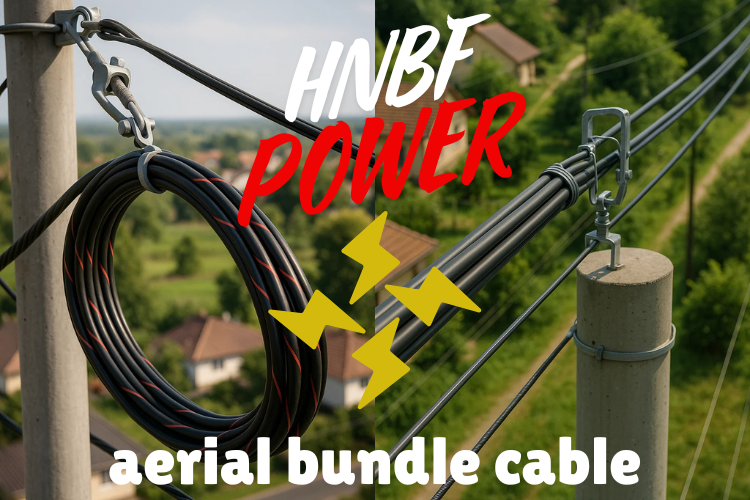
In today’s rapidly expanding power infrastructure, utilities and EPC contractors are under constant pressure to deliver reliable, safe, and cost-effective electricity distribution systems. One of the most effective solutions gaining widespread adoption is the aerial bundle cable (ABC) system. Designed to address common challenges in overhead power lines, ABC offers a modern alternative to traditional bare conductors.
For engineers, procurement teams, and utility planners, understanding the technical advantages and application value of aerial bundle cable is essential when designing or upgrading distribution networks.
What is Aerial Bundle Cable?
Aerial bundle cable (ABC) is a type of overhead power line that uses multiple insulated conductors bundled tightly together. Typically, it consists of aluminum conductors (AAC, AAAC, or ACSR) insulated with cross-linked polyethylene (XLPE), along with a messenger wire that supports the cable mechanically.
Unlike conventional bare conductors, ABC systems are fully insulated, reducing exposure to environmental risks and improving operational safety.
Why Utilities Are Switching to Aerial Bundle Cable
1. Enhanced Safety in Urban and Rural Networks
One of the primary pain points in traditional overhead distribution is the risk of electrical faults caused by conductor contact with trees, animals, or external objects. Aerial bundle cable significantly minimizes these risks due to its insulated design.
This makes ABC particularly suitable for:
- Densely populated urban areas
- Narrow streets and congested zones
- Forested or high-wind regions
By reducing accidental contact and short circuits, utilities can achieve higher network reliability and lower maintenance costs.
2. Reduced Power Loss and Improved Efficiency
Aerial bundle cable systems are engineered to maintain tighter conductor spacing, which reduces line losses and voltage drops. This results in improved energy efficiency, especially in low-voltage (LV) and medium-voltage (MV) distribution systems.
For procurement teams, this translates into:
- Better long-term ROI
- Lower operational costs
- Optimized power delivery performance
3. Lower Installation and Maintenance Costs
Traditional overhead lines require extensive insulation clearance and frequent maintenance due to environmental exposure. ABC systems, on the other hand, simplify installation by allowing closer spacing and fewer supporting structures.
Key cost-saving advantages include:
- Reduced need for tree trimming
- Minimal risk of conductor theft
- Lower fault repair frequency
Over time, these benefits make aerial bundle cable a highly economical solution for power distribution projects.
Technical Composition of Aerial Bundle Cable
Conductors
ABC systems typically use high-quality aluminum conductors such as:
- AAC (All Aluminum Conductor)
- AAAC (All Aluminum Alloy Conductor)
- ACSR (Aluminum Conductor Steel Reinforced)
These materials ensure excellent conductivity, mechanical strength, and durability.
Insulation
The conductors are insulated using XLPE or PE materials, offering:
- High thermal resistance
- UV protection
- Moisture resistance
This insulation is critical in maintaining system reliability under harsh environmental conditions.
Messenger Wire
The messenger wire provides mechanical support to the cable system. It is usually made of galvanized steel or aluminum alloy, ensuring stability and load-bearing capacity.
Applications of Aerial Bundle Cable
Aerial bundle cable is widely used across multiple sectors due to its versatility and performance advantages.
Urban Power Distribution
In cities where space constraints and safety concerns are significant, ABC systems allow for compact and secure installations.
Rural Electrification Projects
For remote and underdeveloped areas, aerial bundle cable provides a cost-effective and reliable solution with minimal infrastructure requirements.
Industrial and Commercial Zones
Industries demand uninterrupted power supply. ABC systems help reduce outages and ensure stable operations in manufacturing plants, warehouses, and commercial facilities.
Temporary and Emergency Installations
ABC cables are also ideal for temporary power setups, such as construction sites or emergency restoration projects, due to their ease of installation and flexibility.
Key Considerations for Procurement Teams
When sourcing aerial bundle cable, procurement professionals should focus on several critical factors:
Quality Standards and Compliance
Ensure the cable meets international standards such as IEC or ASTM. High-quality insulation and conductor materials directly impact performance and lifespan.
Customization Options
Different projects require specific configurations. Partnering with a manufacturer that offers customized solutions ensures optimal system design and efficiency.
Supplier Reliability
Choosing a trusted manufacturer is essential for consistent product quality, timely delivery, and technical support.
Why Choose HNBF Power for Aerial Bundle Cable?
HNBF Power is a global manufacturer specializing in overhead conductors and power cable solutions, including aerial bundle cable systems. With a strong focus on quality, innovation, and customer-centric solutions, HNBF Power supports utilities and EPC contractors worldwide.
Key advantages include:
- Advanced manufacturing facilities
- Strict quality control processes
- Customizable cable designs for diverse applications
- Technical expertise for project-specific requirements
By working closely with clients, HNBF Power ensures that each aerial bundle cable solution is tailored to meet operational, environmental, and regulatory demands.
Future Trends in Aerial Bundle Cable Systems
As power distribution networks evolve, aerial bundle cable technology continues to improve. Emerging trends include:
- Integration with smart grid systems
- Enhanced insulation materials for extreme climates
- Increased adoption in renewable energy distribution
These advancements position ABC as a future-ready solution for modern power infrastructure.
FAQs About Aerial Bundle Cable
What is the main advantage of aerial bundle cable over bare conductors?
The primary advantage is safety. Insulated conductors reduce the risk of short circuits, electrical accidents, and environmental damage.
Is aerial bundle cable suitable for high-voltage applications?
ABC is mainly used for low and medium voltage distribution. For high-voltage transmission, other conductor types are typically used.
How long does aerial bundle cable last?
With proper installation and quality materials, ABC systems can last 25–40 years, depending on environmental conditions.
Can aerial bundle cable reduce power theft?
Yes, the insulated and bundled design makes illegal tapping more difficult, helping utilities reduce power losses.
What factors affect the cost of aerial bundle cable?
Cost depends on conductor type, insulation material, voltage rating, and customization requirements.
Power Your Projects with Reliable ABC Solutions
Aerial bundle cable is transforming the way utilities approach overhead power distribution by offering a safer, more efficient, and cost-effective alternative to traditional systems. For engineers and procurement teams seeking reliable performance and long-term value, ABC is a strategic investment.
HNBF Power stands ready to support your next project with high-quality aerial bundle cable solutions tailored to your exact requirements. Contact HNBF Power today to discuss your specifications and discover how customized cable solutions can enhance your power distribution network.

 English
 Arabic
 French
 Spanish
 Portuguese
 Deutsch
 Turkish
 Italiano
 Russian
 Romaian
 Portuguese (Brazil)
 Greek
Greek